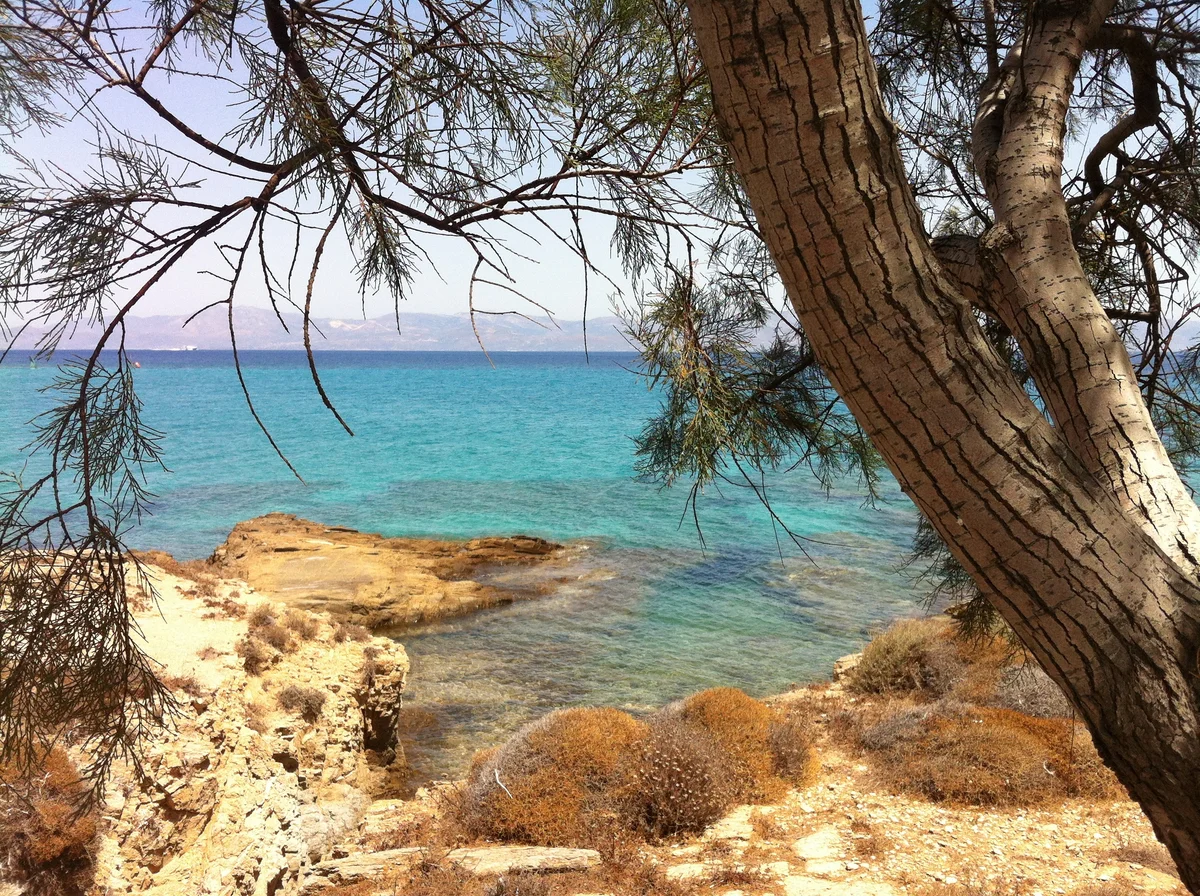
Paros is usually introduced through its summer. Blue water. Whitewashed villages. Long lunches. Beaches beneath an intense Aegean sun. And rightly so.
But there is another side of the island that we believe deserves to be discovered.
From October onwards, Paros slowly exhales.
The summer crowds fade, the beaches empty, and the island settles back into its year-round rhythm. Yet one of the things that often surprises visitors is that Paros never feels cut off from the rest of Greece.
There are ferry connections every day throughout the year, linking the island to Athens and the wider Cyclades, and regular flights continue to operate even during the quieter months. This accessibility is one of the reasons Paros has become not only a beloved holiday destination, but also a realistic place to spend extended periods of the year, or even to live permanently.
And when the pace slows, something wonderful happens: you can hear the island again.
When the Island Slows Down
The first thing you notice is the change in rhythm. Paros remains beautifully connected throughout the year, with ferries arriving and departing every day and regular flights linking the island with Athens. It never becomes inaccessible or truly dormant. Instead, what changes is the pace of life. As the summer crowds leave, those who live on the island year-round have something they rarely have in August: time.
Time to stop for a coffee without looking at the clock.
Time to have a long lunch with friends.
Time to run into someone you haven't seen for months and sit down for a conversation.
Time for neighbours to meet again, for families to reconnect, for the village square to become a meeting place rather than simply a passage between destinations.
Summer on Paros is social in a very public way. Winter is social in a much more intimate one. The island's year-round community comes back to the foreground. This is perhaps one of the most beautiful things about living here: when the visitors leave, the island does not become empty. It becomes more connected to itself. And for those considering Paros as a place to live rather than simply a place to visit, this distinction matters enormously.
Lefkes, Marpissa and the Inland Villages
The cooler months are perhaps the best time to explore the traditional villages, and to discover Paros on foot. The island is criss-crossed by an extensive network of old footpaths and hiking trails, many of them following ancient routes between villages, churches, monasteries and the coast. In summer, the intense heat can make longer walks challenging. From autumn through spring, the cooler temperatures make these paths much more inviting. The Byzantine Road, connecting Lefkes with Prodromos, is one of the most beautiful examples. Built centuries ago, the old marble-paved route crosses the landscape almost quietly, offering a glimpse into a Paros that existed long before tourism. After the first rains, the landscape becomes surprisingly green. Wildflowers appear along the paths, the olive trees stand out against the hills, and the light takes on a softer quality. There is no need to rush.
This is the season for walking, stopping for coffee, talking to people, and noticing details that summer crowds can easily hide. In many ways, the cooler months offer the best invitation to experience Paros at walking pace.
The Landscape Changes
Summer on Paros is dominated by the colours of stone, sea and sun. Winter introduces green. After the first rains, the hills become covered with grasses and wildflowers. Olive trees become more prominent. Agricultural land feels alive again. The landscape that can look almost austere in August becomes unexpectedly lush. For anyone interested in photography, architecture or simply walking, this transformation is one of the island's great seasonal pleasures.
Beaches Without the Crowds
The sea remains beautiful long after the summer season ends. Swimming becomes more weather-dependent, of course, but the beaches themselves become destinations for walking rather than sunbathing. Imagine Kolymbithres without the boats and summer crowds. Or the long coastline around Molos, with almost nobody on the beach. Or a winter afternoon at Livadakia, when the Aegean is completely different in colour. The beaches reveal their relationship with the landscape rather than functioning simply as summer destinations.
Eating Like a Local
One of the pleasures of visiting Paros outside summer is that eating becomes less about reservations and more about routine. A slow lunch. A simple plate of local food. A glass of wine. A coffee that stretches into the afternoon. Some of the island's best experiences are found precisely in these ordinary moments. And because the pace is slower, conversations tend to be longer. You begin to recognise people.
The island becomes less of a destination and more of a place.
A Different Kind of Beauty
Paros does not lose its beauty when summer ends. It reveals another palette.
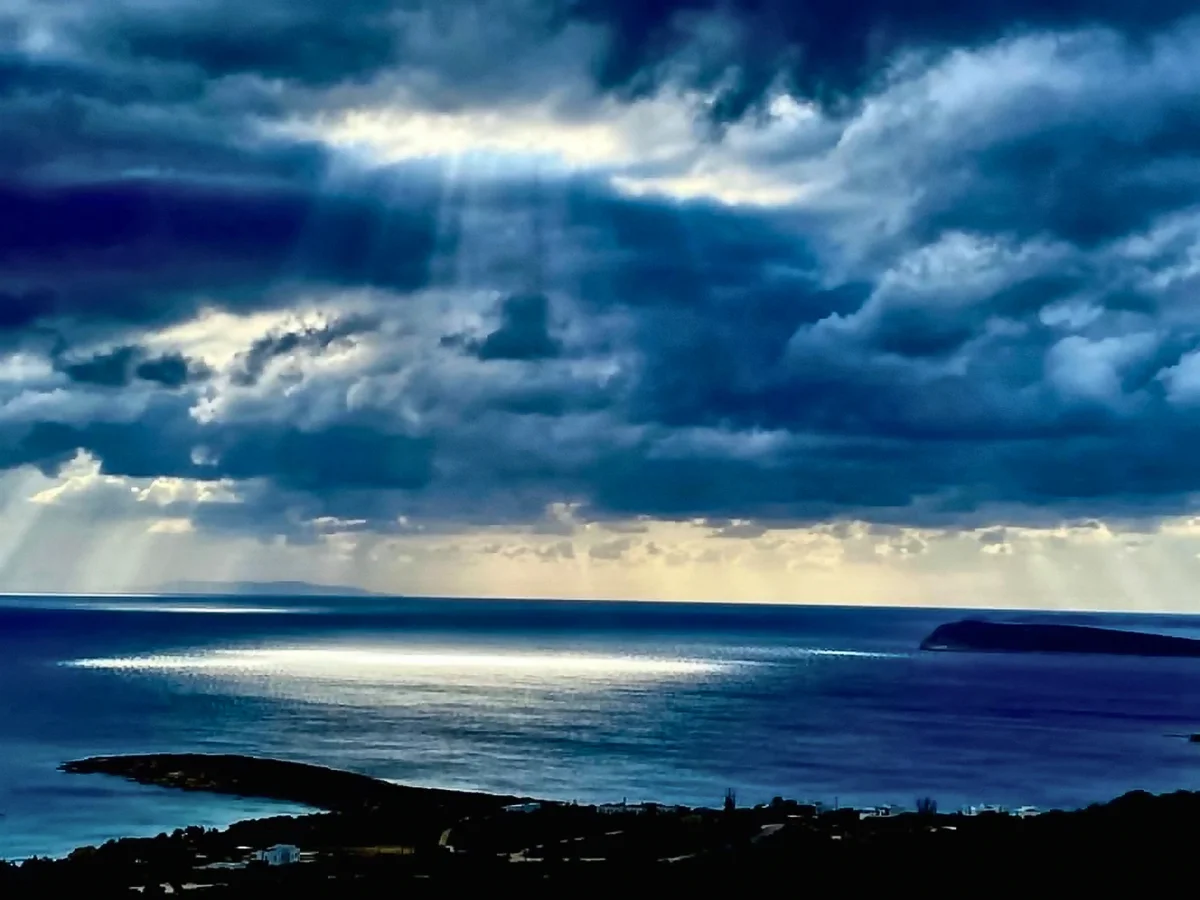
The light becomes softer in some moments and dramatically more intense in others. Clouds move across the Aegean, creating depth and perspective in the landscape and transforming the colours of the sea, the hills and the whitewashed villages.
And then there are the sunsets.
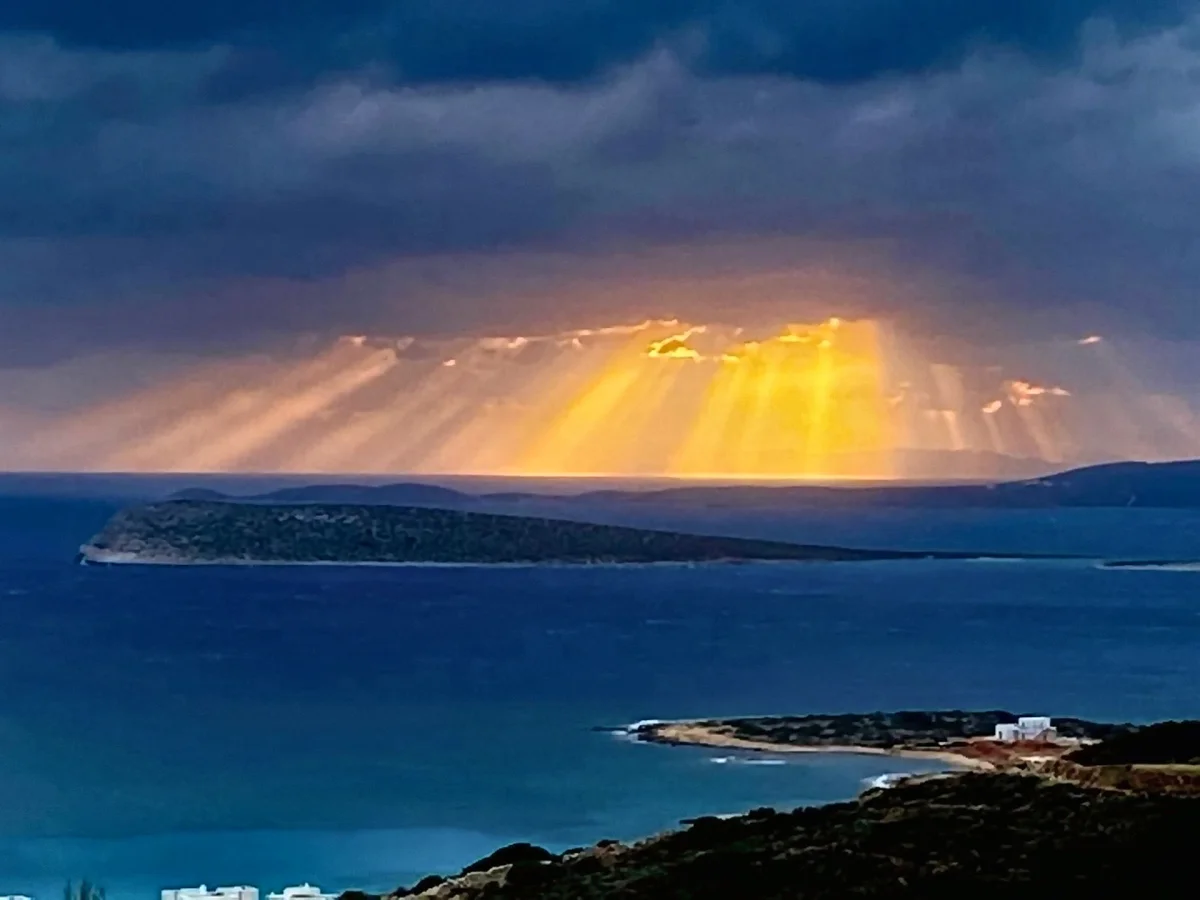
Perhaps because the air is clearer, perhaps because of the changing skies, they can be extraordinarily vivid: deep golds, pinks, oranges and purples spreading across the horizon, often with clouds catching the last light of the day.
The landscape itself becomes more colourful. The greens of the hills return after the first rains, wildflowers begin to appear, and the warm tones of the earth contrast beautifully with the white of the villages and the blue-grey of the winter sea.
There is movement in the sky, changing light on the water, wind shaping the clouds.
The Paros of the cooler months is not a quieter version of the summer island. It is a more atmospheric one.
And perhaps this is one of the pleasures of living here: discovering that the island you thought you knew can look completely different from one season to the next.
Why It Matters to Us
Our understanding of Paros has evolved with the island and with our own lives here.
We gradually discovered what it meant to live on Paros beyond the summer months. We became part of the local community. Over the years, we have come to appreciate the island in all its seasons, not only as a destination, but as a place with its own year-round rhythm, community and character.
This is something we always encourage our clients to experience before buying a property here.
Come in summer, certainly.
But if you are considering making Paros part of your life, come back in another season too. Stay for a few days when the island is quieter. Walk its paths. Watch the changing light. Sit in a village square and see how people reconnect when summer gives way to everyday life.
You may discover that the Paros you love most is not necessarily the one you first came looking for.